Plasmalogens are a class of phospholipids that make up a substantial portion of the brain’s cell membranes, particularly in myelin sheaths and neuronal tissue. Unlike ordinary phospholipids, they carry a vinyl-ether bond at one end that gives them distinctive antioxidant and membrane-structuring properties. Researchers studying autism spectrum disorder (ASD) have begun examining whether disruptions in plasmalogen availability or synthesis could play a role in the neurodevelopmental differences observed in some individuals on the spectrum.
This line of inquiry traces back to a fundamental cellular organelle: the peroxisome. Peroxisomes are responsible for the first steps of plasmalogen biosynthesis, and disruptions in peroxisomal function produce severe neurological consequences. Understanding this biology does not mean that plasmalogen deficiency explains ASD — the evidence is far too early for that conclusion — but it does open a scientifically coherent research avenue worth examining carefully and honestly.
Key Takeaways
- Plasmalogens are antioxidant-active phospholipids essential for brain membrane integrity and myelin, and their synthesis begins in the peroxisome.
- Peroxisomes are critical for normal brain development; severe peroxisomal dysfunction causes catastrophic neurological damage, illustrating how dependent the brain is on this organelle [1].
- Some early research has observed altered plasmalogen levels in individuals with ASD, but this is observational and does not establish plasmalogen deficiency as a cause of ASD.
- The intersection of peroxisomal biology, oxidative stress, and neurodevelopment is a legitimate and active area of scientific inquiry — but it is far from producing clinical recommendations.
- No published research has tested shilajit in ASD populations or on plasmalogen levels; any connection between shilajit and this research area remains speculative.
What Plasmalogens Are and Why They Matter to the Brain
Plasmalogens belong to a subclass of glycerophospholipids known as ether lipids. The defining feature is a vinyl-ether linkage at the sn-1 position of the glycerol backbone, which distinguishes them from the ester-linked phospholipids that dominate most cell membranes. This structural difference has real functional consequences: the vinyl-ether bond is selectively reactive with singlet oxygen and hydroxyl radicals, giving plasmalogens a built-in antioxidant role within membranes.
The brain is exceptionally rich in plasmalogens. Myelin — the insulating sheath around axons that allows fast electrical conduction — contains plasmalogen-type phosphatidylethanolamine as a major lipid component. Because myelin development is a process that accelerates during early childhood and continues into adolescence, any significant disruption to plasmalogen availability during those windows could, in theory, interfere with the normal maturation of neural circuits.
Peroxisomes: The Factory Where Plasmalogen Synthesis Begins
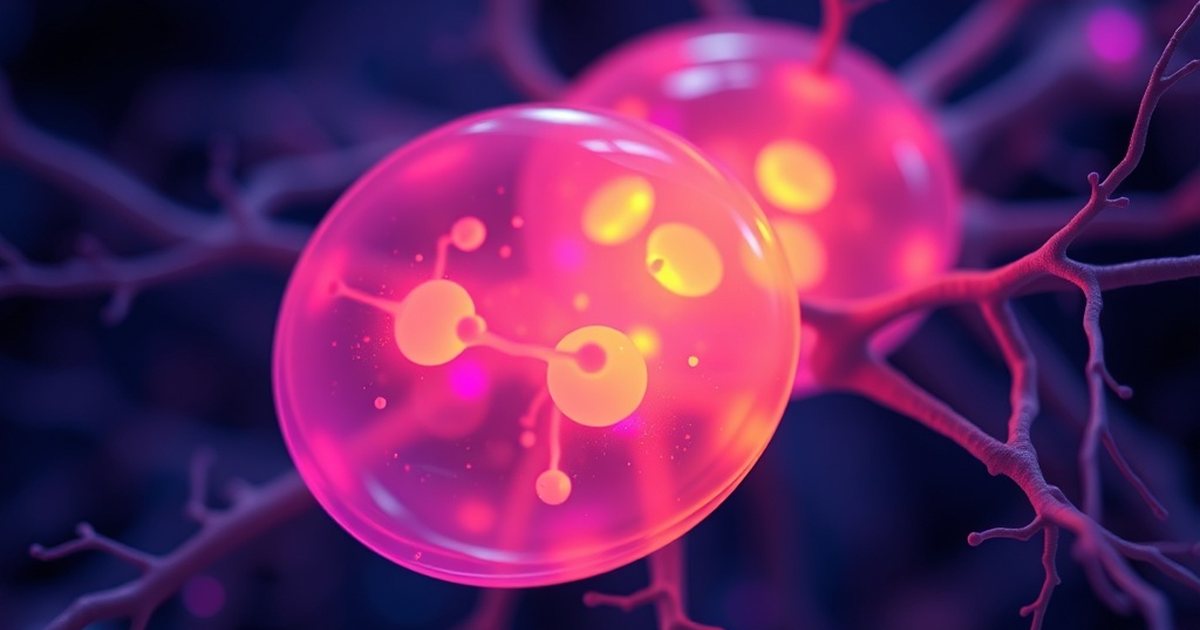
The first two enzymatic steps of plasmalogen biosynthesis occur inside the peroxisome. This makes peroxisomal health inseparable from adequate plasmalogen production. Peroxisomes are found in virtually every cell type, but the brain is among the organs most sensitive to peroxisomal malfunction, in part because neurons rely on proper membrane lipid composition for signaling, myelination, and protection against oxidative stress [1].
The importance of this organelle for brain development is best illustrated by peroxisomal biogenesis disorders (PBDs), such as Zellweger syndrome. In PBDs, the peroxisome fails to form or function correctly, and the result is catastrophic neurological damage apparent at or before birth. These are extreme cases, but they demonstrate in stark terms how much the developing brain depends on functional peroxisomal activity [1].

Researchers studying milder or partial disruptions to peroxisomal activity have wondered whether subtler deficits — not severe enough to produce a clinical PBD — might nonetheless contribute to variation in neurodevelopmental outcomes. This is one conceptual bridge between peroxisomal biology and conditions like ASD, though it remains a hypothesis rather than an established mechanism.
The Proposed Link Between Plasmalogen Deficiency and ASD
A number of research groups have reported altered lipid profiles in individuals with ASD compared with neurotypical controls, with some studies noting reduced plasmalogen concentrations in blood or brain tissue samples. The hypothesis is that lower plasmalogen availability could impair membrane fluidity, reduce protection of neurons against oxidative damage, and disrupt myelin maintenance — all processes relevant to connectivity differences observed in ASD brains.
It is important to be precise about what this hypothesis does and does not claim. Researchers are not asserting that plasmalogen deficiency causes ASD. ASD is a heterogeneous condition with multiple genetic and environmental contributors. The plasmalogen angle is better understood as one possible biological pathway that may be dysregulated in a subset of individuals — particularly those where peroxisomal or oxidative stress markers are also elevated.
The current state of evidence is observational and preliminary. No large randomized trials have tested plasmalogen supplementation in ASD populations with adequate controls. Some early small-scale studies have begun exploring whether providing plasmalogen precursors or dietary sources alters biological markers, but these have not yet produced practice-changing findings.
Peroxisomal Function, Oxidative Stress, and the Developing Brain
Beyond plasmalogen synthesis, peroxisomes perform a range of other functions central to brain health. They are involved in the oxidation of very-long-chain fatty acids, the metabolism of bile acid precursors, and the breakdown of hydrogen peroxide through catalase — an important antioxidant enzyme. Peroxisomes and mitochondria work in close coordination, sharing metabolic intermediates and influencing each other’s function through signaling pathways [1].
Elevated oxidative stress is a consistently reported feature in studies of ASD biology, though it is not clear whether it is a cause, a consequence, or simply a co-occurring feature. Given that plasmalogens serve as membrane antioxidants and that peroxisomes produce catalase, any impairment in peroxisomal activity could plausibly contribute to a pro-oxidant cellular environment in neurons. This adds another layer to why peroxisomal research is viewed with interest in the neurodevelopmental field.
None of this amounts to a treatment target yet. It does, however, provide a coherent biological narrative for why researchers are examining peroxisomal endpoints in ASD studies, and why nutritional researchers are increasingly interested in lipid composition and antioxidant status in this population.

Where Shilajit and Fulvic Acid Might Be Tangentially Relevant — and Where the Evidence Stops
Shilajit is sometimes discussed in the context of cellular energy and antioxidant support because its primary active components — fulvic acid, humic acids, and dibenzo-alpha-pyrones — have demonstrated effects on mitochondrial electron transport and oxidative stress markers in cell culture and animal studies. Since peroxisomes and mitochondria are metabolically coupled, some researchers have speculated about whether agents that support mitochondrial function might indirectly benefit peroxisomal activity as well.
Shilajit also contains trace minerals including zinc, selenium, and manganese, which serve as cofactors for numerous antioxidant enzymes including superoxide dismutase and glutathione peroxidase. Adequate mineral status is a prerequisite for normal enzymatic function across many cellular compartments, including peroxisomes.
It must be stated directly: no published clinical study has tested shilajit in individuals with ASD, and no study has examined shilajit’s effect on plasmalogen levels or peroxisomal enzyme activity in humans. The connections described above are mechanistic plausibility arguments, not evidence. Drawing a straight line from ‘shilajit supports mitochondria’ to ‘shilajit helps ASD through plasmalogen pathways’ would be multiple inferential leaps beyond what the current data support. This is an area where intellectual honesty requires clear separation between what is known and what is speculated.
What This Research Area Actually Suggests for the Future
The growing interest in peroxisomal biology and lipid metabolism in ASD research reflects a broader shift toward understanding the metabolic and cellular underpinnings of neurodevelopmental conditions, rather than viewing them purely through a behavioral or purely genetic lens. If plasmalogen deficiency turns out to be a reproducible and meaningful biological subtype of ASD, it would open avenues for biomarker testing, dietary intervention research, and potentially targeted supplementation trials.
For now, the most accurate summary is this: peroxisomes play a foundational role in brain development and function [1]; plasmalogens synthesized in peroxisomes are critical for membrane integrity and neuronal antioxidant defense; preliminary evidence suggests altered plasmalogen status in some individuals with ASD; and a small number of researchers are actively exploring whether addressing this could be clinically useful. The field is early, the evidence is incomplete, and definitive conclusions are not yet possible.
🛒 Where to Buy Plasmalogen Supplements
- Prodrome Sciences ProdromeNeuro
capsules, 900 mg / 2 caps — Lab-synthesized DHA-ethanolamine plasmalogen used in Dayan Goodenowe’s research; premium-priced. - Daiwa Health Advanced Omega-3 Brain
softgels, 50 mg HSOP — Hokkaido Scallop Oil Plasmalogen softgels with natto peptides; pilot cognitive data. - REMORY Sea Squirt Plasmalogen
capsules, 30-day supply — Ascidian (sea-squirt)-derived alternative source for those avoiding scallop.
As an Amazon Associate we earn from qualifying purchases. Plasmalogen supplements vary by source (lab-synthesized vs. scallop- or sea-squirt-derived) and purity — check the form, dose, and third-party testing before buying.
A Note on the Evidence
The research discussed here is preliminary, largely observational, and does not support any supplement — including shilajit — as a treatment or support for ASD; parents and caregivers should consult a licensed physician or pediatric specialist before considering any nutritional intervention. Shilajit products carry documented risks of heavy metal contamination, and quality varies widely across commercial preparations — only products that have been independently third-party tested for purity should be considered.

Frequently Asked Questions
What are plasmalogens and where are they found in the body?
Plasmalogens are a type of phospholipid characterized by a vinyl-ether bond that gives them antioxidant properties within cell membranes. They are particularly concentrated in the brain, heart, and immune cells, with high levels in myelin sheaths. Their structural role in neuronal membranes makes them especially relevant to neurodevelopmental research.
Why are peroxisomes important for brain development?
Peroxisomes perform several metabolic functions essential to brain formation and maintenance, including the first steps of plasmalogen synthesis and the breakdown of very-long-chain fatty acids. Research has shown that proper peroxisomal function is indispensable for normal brain development — when peroxisomes fail to form or work correctly, the neurological consequences are severe [1].
Is there evidence that plasmalogen deficiency causes autism?
No. Current evidence does not establish plasmalogen deficiency as a cause of ASD. Some studies have reported lower plasmalogen levels in certain individuals with ASD, but these are observational findings in heterogeneous populations. ASD is a complex, multifactorial condition, and it would be inaccurate to reduce it to a single lipid pathway.
Has shilajit been studied as a support for peroxisomal function or in autism?
No clinical research has specifically tested shilajit’s effects on peroxisomal activity or plasmalogen levels, and no trials have been conducted in ASD populations. While shilajit contains compounds with antioxidant and mitochondrial-support properties in preclinical studies, extrapolating this to a claim about peroxisomal health or ASD would go beyond what the evidence currently allows.
Are there any nutritional approaches being studied for plasmalogen support?
Research is exploring whether dietary sources of plasmalogen precursors — such as certain animal-derived fats — or antioxidant-rich diets could influence plasmalogen levels. These are early-stage investigations. No specific supplement protocol has been validated in clinical trials for plasmalogen-related outcomes in ASD.
Should parents consider plasmalogen testing or supplements for a child with ASD?
Any decisions about testing or supplementation for a child with ASD should be made in consultation with a qualified physician or pediatric neurologist. This article is informational only. Supplements, including shilajit, are not evaluated or approved by regulatory authorities for use in ASD, and self-directed supplementation in children carries real risks including purity concerns and unknown interactions.
References
- Berger J et al. Peroxisomes in brain development and function. Biochimica et biophysica acta (2016). PMID 26686055
These statements have not been evaluated by the Food and Drug Administration. This information is not intended to diagnose, treat, cure, or prevent any disease. Content is for informational purposes only and is not medical advice; consult a qualified healthcare provider before starting any supplement. As an Amazon Associate we earn from qualifying purchases.
